What Are the 3 Types of Boilers?


Combi, system, or regular — a data-driven breakdown of every boiler type, real UK installation costs, government efficiency data, and how to choose the right heating system for your home.

Boiler Service Brighton | Boiler Repair Brighton | Gas Engineer Brighton | Central Heating Services Brighton


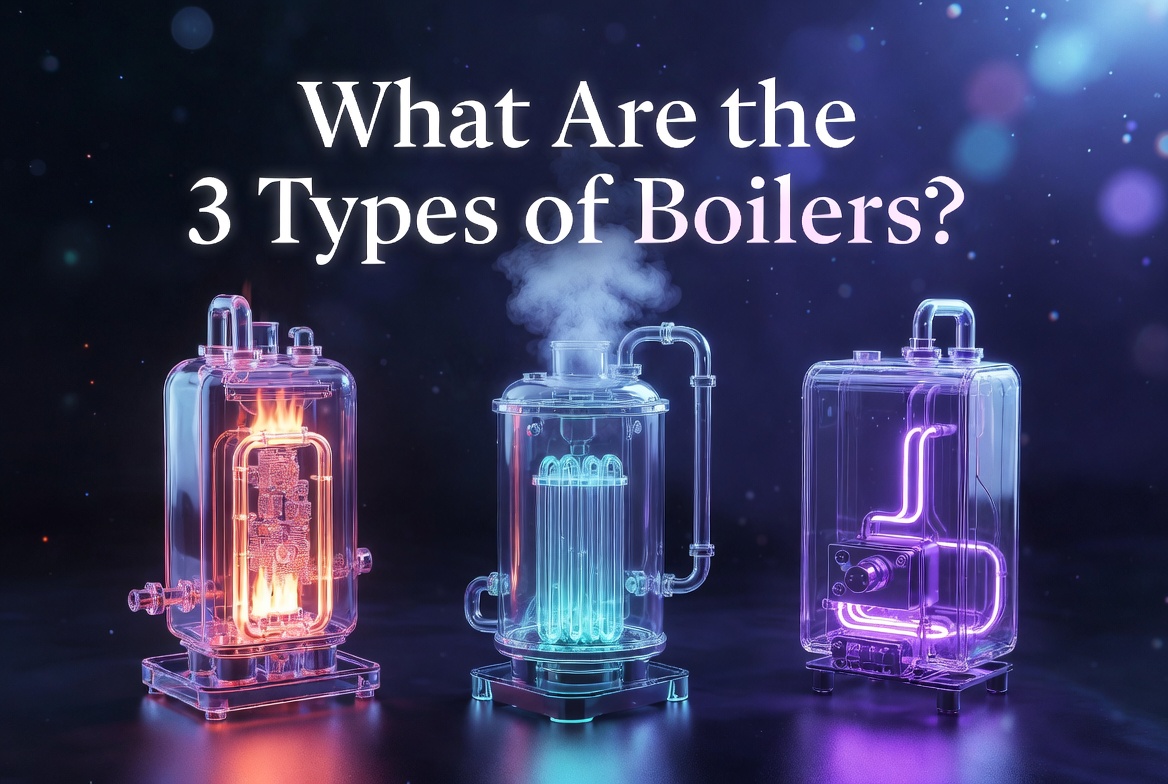
Quick answer: The three main types of domestic boilers used in UK homes are Combi (combination) Boilerssystem boilers, and regular (conventional / heat-only) boilers. Each works differently, suits a different home size, and carries its own cost profile. This guide walks through all three in full detail — with pricing, efficiency ratings, government data, and expert guidance.

Whether your current boiler has finally given up the ghost, you are planning a new build, or you simply want to understand what is actually sitting on your kitchen wall, the question of boiler types is one of the most important decisions a UK homeowner can make. Getting it wrong means years of inefficiency, unnecessary expense, and tepid showers.

Central heating is the backbone of UK home comfort. According to the Department for Energy Security and Net Zero, boilers account for roughly 55% of annual household energy bills, making the choice of boiler type a matter of both comfort and financial significance. If you are in Brighton and looking for professional Central Heating Services in Brighton, or need a Gas Engineer in Brighton to advise on a replacement, understanding the fundamentals below will put you in a far stronger position before any engineer arrives at your door.


📋 Index — Contents

  • An overview of the 3 boiler types
  • Combi (combination) boilers — full guide
  • System boilers — full guide
  • Regular (conventional) boilers — full guide
  • UK boiler costs & price comparison (2025)
  • Efficiency ratings & running costs
  • Industrial boiler types (fire-tube, water-tube, electric)
  • Government schemes & UK data
  • How to choose the right boiler for your home
  • Frequently asked questions
  • Boiler services in Brighton

An Overview of the 3 Boiler Types

From a domestic standpoint, UK boilers fall neatly into three categories. They may look broadly similar on the outside — a white or grey rectangular unit mounted on a wall — but internally they operate very differently. The distinctions come down to three key variables: how and where hot water is stored (or not stored), whether the system requires tanks in the loft, and how many bathrooms the system can realistically serve at any one time.

~80%

of new UK boiler installations are combi boilers

£1,800

average minimum cost including installation (combi, 2025)

92%+

efficiency rating required for all new boilers by UK regulation

10–15 yrs

expected lifespan of a quality modern boiler

Here is a high-level comparison before we dive into the detail of each type:

Feature Combi Boiler System Boiler Regular Boiler
Hot water storage None — on demand Hot water cylinder Cylinder + cold tank
Loft tank required No No Yes
Best for 1–2 bathrooms, small–medium homes 2+ bathrooms, larger homes Large or older properties
Installation cost (incl. fitting) £1,800–£4,000 £2,500–£5,000 £2,200–£5,500
Compatible with solar thermal Mostly no Yes Yes
Simultaneous taps Limited Yes Yes
Space required Minimal Moderate (cylinder) High (cylinder + tanks)


1. Combi (Combination) Boilers — The Full Guide
1 Combi Boiler

The most popular boiler in the UK — compact, instant hot water, no tanks needed

How a combi boiler works

A combi boiler — short for combination boiler — integrates both a high-efficiency water heater and a central heating unit into a single, wall-mounted appliance. Unlike the other two types, it does not require a separate hot water cylinder or a cold water storage tank in the loft. Instead, it heats water directly from the mains supply the moment you open a tap or turn on the shower. When fuel ignites, a built-in heat exchanger rapidly raises the temperature of incoming cold water to your desired level, delivering it on demand without any pre-heating or storage period.

This makes the combi boiler the simplest, most compact, and — for the right home — the most economical boiler to install. You are not paying to heat a tank of water that may sit unused for hours. If no hot water is required, the boiler simply does not fire for domestic hot water purposes.

✓ Advantages

  • No separate hot water tank — saves significant space
  • Hot water delivered instantly on demand
  • Lower installation cost than other types
  • Energy-efficient — no heat lost from stored water
  • Simpler system with fewer components to service
  • Most Gas Safe engineers are familiar with combi servicing
  • Modern A-rated models exceed 90% efficiency
  • Water comes directly from mains — cleaner and fresher

✗ Disadvantages

  • Flow rate drops if two taps run simultaneously
  • Not ideal for homes with 3+ bathrooms in simultaneous use
  • Performance depends on good incoming mains pressure
  • Incompatible with most power shower units
  • Generally cannot be used with solar thermal systems
  • More moving parts than a simple heat-only boiler

Best suited for

A combi boiler is the right choice if your home has one or two bathrooms, a smaller property footprint (flats, terraces, two-bedroom or three-bedroom semi-detached houses), limited loft or airing cupboard space, and a good incoming mains water pressure. Around 80% of all new domestic boiler installations in the UK are combis, reflecting just how well-suited they are to the typical British property.

Combi boiler installation cost (UK, 2025)

Budget – £1,800

Mid-range – £2,500–£3,000

Premium – up to £4,000+

Costs include boiler unit, labour, flue, system flush, and commissioning. Like-for-like combi swaps are at the lower end; conversions from system or regular boilers add £1,000–£2,000+.

2. System Boilers — The Full Guide

2 System Boiler

Ideal for larger homes — high-pressure hot water to multiple taps at once

How a system boiler works

A system boiler works alongside a dedicated hot water storage cylinder — typically located in an airing cupboard — but crucially does not require a cold water storage tank in the loft. Many of the key components found separately in a conventional system (the pump, expansion vessel, and various valves) are built directly into the boiler unit itself, which simplifies installation and reduces the number of external parts to maintain.

The system boiler heats water and sends it to the sealed cylinder for storage. When you turn on a hot tap, the stored water flows out under mains pressure. Because it connects to a sealed (pressurised) system rather than a gravity-fed tank, it can deliver hot water to multiple bathrooms simultaneously without a significant drop in pressure — a major advantage over combi boilers in larger households.

Think of a system boiler as a modern, neater upgrade on the traditional regular boiler: it retains the storage-cylinder approach for high hot water demand, while eliminating the cold water tank that older properties used to require in the loft space.

✓ Advantages

  • Supplies hot water to multiple taps simultaneously
  • No cold water tank in the loft — reduced freeze risk
  • Built-in components mean faster, tidier installation
  • Compatible with solar thermal heating systems
  • Good for homes with high hot water demand
  • Maintains water pressure throughout the home

✗ Disadvantages

  • Requires space for a hot water cylinder
  • Hot water will run out if the cylinder is exhausted
  • Higher installation cost than a combi
  • Relies on good incoming mains pressure
  • Cylinder loses heat over time — some standing energy loss

Best suited for

A system boiler suits homes with two or more bathrooms, a medium to large number of occupants, and reasonable mains pressure. If multiple people routinely shower or run baths at the same time — a common scenario in family homes — a system boiler is far better equipped than a combi to meet that demand without complaint.


System boiler installation cost (UK, 2025)

Budget – £2,500

Mid-range – £3,000–£4,000

Premium – up to £5,000+

3. Regular (Conventional / Heat-Only) Boilers — The Full Guide

3 Regular (Conventional) Boiler

Traditional heat-only boilers — ideal for older homes and low-pressure areas

How a regular boiler works

Regular boilers — also called conventional boilers, heat-only boilers, or open-vent boilers — are the traditional heating setup found in many older UK properties. They operate with two separate storage vessels: a hot water storage cylinder (usually in the airing cupboard) and a cold water feed-and-expansion tank (usually located in the loft). These work in conjunction to supply hot water throughout the property.

Because a regular boiler draws its water supply from the gravity-fed cold tank rather than directly from the pressurised mains, it is well-suited to properties that experience low incoming mains water pressure — an issue in some parts of Brighton and across many older UK housing estates. The system does not depend on mains pressure to function effectively, as the gravity head from the loft tank is sufficient to push water through the radiators and taps.

Regular boilers are also the best choice when a property already has an old or extensive existing radiator system that has not been designed or upgraded for the higher pressures associated with modern combi or system boilers. Swapping to a combi in a house full of old-fashioned large-bore pipework can cause more problems than it solves.

✓ Advantages

  • Works well in low mains water pressure areas
  • Hot water to multiple taps simultaneously
  • Compatible with solar thermal systems
  • Immersion heater backup available if boiler fails
  • Cheapest individual boiler unit to purchase
  • Ideal for older properties with large radiator systems

✗ Disadvantages

  • Requires the most space — boiler, cylinder, and loft tank
  • Hot water is not instant — tank must reheat when emptied
  • More complex installation — higher total cost
  • Heat lost from stored hot water over time
  • Loft tank can freeze in severe winters if uninsulated
  • Less common in new builds — fewer engineers specialise

Best suited for

Regular boilers suit large, older homes — particularly Victorian terraces, Edwardian semi-detached houses, or any property where an existing conventional central heating system is already in place and in reasonable condition. If your home already has all the tanks and cylinders in situ, replacing the regular boiler like-for-like is typically the most cost-effective and lowest-disruption option.

Regular boiler installation cost (UK, 2025)

Budget – £2,200

Mid-range – £3,000–£4,200
Premium – up to £5,500+

UK Boiler Costs & Price Comparison (2025)

One of the most searched questions in the UK home improvement space is simply: how much does a new boiler cost? The honest answer is that it varies — considerably — based on the boiler type, brand, output size, property characteristics, and installation complexity. The following data reflects real 2025 UK market prices gathered from multiple industry sources.

Boiler Type Unit Cost Only With Installation Conversion Cost (if switching type) Typical Install Time
Combi £600–£3,000 £1,800–£4,000 +£1,000–£3,000 4–6 hours (like-for-like); 1–2 days (conversion)
System £590–£3,500 £2,500–£5,000 +£1,200–£2,500 1–2 days
Regular £610–£3,500 £2,200–£5,500 +£1,400–£3,000 1–2 days; up to 3 days for full conversion

Important: All gas boiler work in the UK must legally be carried out by a Gas Safe registered engineer. It is illegal — and dangerous — to install or work on a gas boiler yourself. Always verify your engineer’s Gas Safe registration number at gassaferegister.co.uk before work begins. If you need a Gas Engineer in Brighton, ensure they are fully registered before commissioning any work.

A boiler operating at 98% efficiency converts 98p of every £1 spent on gas into usable heat. Switching from an old G-rated boiler (70–80% efficient) to a new A-rated condensing boiler can reduce heating bills by up to £580 per year for an average UK semi-detached home, according to the Energy Saving Trust.

What is included in a standard boiler installation?

A reputable boiler installation in the UK should typically include: removal and responsible disposal of the old boiler; supply and fitting of the new A-rated boiler; connection to existing pipework and gas supply; fitting of a new flue where required; a full system flush to remove sludge and debris; inhibitor treatment to protect the heat exchanger; leak testing and commissioning; a Gas Safe certificate; and a demonstration of the new controls to the homeowner. Smart thermostats, magnetic filters, and new thermostatic radiator valves are typically chargeable extras.

For Brighton homeowners, annual Boiler Service Brighton appointments are not just recommended — they are typically a contractual requirement to maintain extended warranty cover. A missed annual service can void the manufacturer’s warranty entirely, leaving you exposed to significant repair costs.

Additional cost factors

Several variables can push your installation cost higher than the baseline figures. Relocating the boiler to a different wall or room adds significant labour and pipework costs — typically £500 to £1,000 or more. Upgrading old pipework to current Gas Safe regulations can add £200 to £500. Installing a new magnetic filter (which protects the boiler from sludge damage and extends its working life) costs approximately £100 to £200 extra. Smart heating controls such as Nest or Hive thermostats add a further £150 to £300. In areas such as Brighton and the South East, labour rates tend to be higher than the national average, reflecting the elevated cost of living across the region.

Efficiency Ratings & Running Costs

Since April 2005, all new gas boilers installed in the UK must be condensing boilers — a design that recovers heat from exhaust gases that older boilers simply vented away. Modern condensing boilers achieve efficiency ratings of 90% to 98%, compared to as low as 60% to 70% for non-condensing boilers built before 2005. That gap directly translates into your annual fuel bill.

By upgrading from a non-condensing boiler rated at 70% efficiency to a modern A-rated condensing model at 92% efficiency, the average UK household could reduce the heat-related portion of their energy bill by up to 30%.
— UK Government BEIS Domestic Retrofit Cost Assumptions Report

Efficiency by boiler type

Combi ——————————————————————————————Up to 94–98%
System——————————————————————–Up to 92–95%
Regular——————————————–Up to 90–93%

Efficiency ratings for modern A-rated condensing boilers. Actual efficiency in use depends on heating controls, system design, and maintenance regime.

In purely energy terms, combi boilers have a slight efficiency edge because there is no standing heat loss from a stored cylinder. However, the difference in real-world annual bills between a well-maintained modern combi and a modern system boiler is relatively small — the right boiler type for your home matters far more than chasing a one-percentage-point efficiency gain on paper.

Annual boiler servicing is the single most effective way to maintain efficiency and extend working life. Industry guidance, widely supported by manufacturers and Gas Safe engineers alike, recommends an annual service — typically costing between £70 and £120 in the Brighton area. Skipping servicing allows heat exchanger fouling, pressure drift, and valve wear to accumulate, quietly eroding efficiency and increasing the risk of a breakdown in winter. If you need a Boiler Service in Brighton, a registered engineer will inspect the heat exchanger, clean the burner, check flue integrity, test all controls, and issue a service report — usually within an hour to ninety minutes.

Industrial Boiler Types: Beyond the Home

In commercial and industrial settings, boiler classification follows a different framework — one focused on construction method, operating pressure, and scale rather than domestic hot water provision. While this section is less relevant to most homeowners, it is included here as a complete reference for engineers, facilities managers, and technically-minded readers.

Industrial Type How it Works Typical Application Pressure Range
Fire-Tube Boiler Hot combustion gases pass through tubes surrounded by water in a large shell. Water absorbs heat and converts to steam or hot water. Heating systems, small industrial processes, breweries, distilleries Up to 20 bar
Water-Tube Boiler Water flows through tubes surrounded by hot gases. Designed for high pressure and steam generation at scale. Power generation, large manufacturing facilities, chemical plants 20–300+ bar
Electric Boiler Uses electrical resistance elements to heat water directly — no combustion, no flue required. Properties off the gas grid, zero-emission zones, apartments without gas access Varies

Electric boilers deserve special mention in a domestic context too. While they achieve 99–100% efficiency (virtually all electricity is converted to heat), operating costs are substantially higher because electricity is more expensive per unit of energy than gas. As of April 2025, the energy price cap sets electricity at approximately £0.27 per kWh compared to approximately £0.06 per kWh for gas. The annual running cost of an electric boiler can therefore be roughly double that of an equivalent gas boiler, despite the superior efficiency rating.

UK Government Data & Official Statistics

Official Government Source

The UK government’s Department for Energy Security and Net Zero (DESNZ) publishes detailed statistics on household heating, boiler upgrade schemes, and energy efficiency. These figures are drawn from official published data:

  • Boilers represented 10% of all measures installed under ECO4 to the end of Q2 2025, with heating measures overall accounting for 70% of ECO4 installations (source: DESNZ Household Energy Efficiency Statistical Release, August 2025).
  • The Energy Company Obligation (ECO) has benefited approximately 2.5 million UK households with funded heating improvements since 2013.
  • Micro-generation measures (heat pumps, biomass boilers, solar PV) grew to 11% of all installed measures in 2024, up from 10% the previous year — reflecting the gradual shift away from purely gas-based heating.
  • The Boiler Upgrade Scheme (BUS) offers grants of up to £7,500 for qualifying heat pump installations — an incentive for homeowners considering alternatives to gas boilers. Around 19,100 BUS vouchers had been redeemed by the end of December 2023, with uptake continuing to grow through 2024 and 2025.
  • The estimated lifetime energy savings across ECO and Green Deal schemes reached 224,400 GWh to the end of March 2022.

🔗 View the full Boiler Upgrade Scheme statistics on GOV.UK →

The ECO4 Scheme: could you get a free boiler replacement?

The Energy Company Obligation (ECO4) scheme, running until March 2026, provides funding for eligible households to receive a replacement boiler or other energy efficiency measures at no cost. Eligibility typically requires: receipt of certain means-tested benefits (such as Universal Credit, Pension Credit, or Child Benefit with a household income under £31,000); an existing boiler that is more than eight years old; a property with an EPC rating of D or below; and connection to the mains gas network. The grant per household can reach up to £20,000, though this covers a package of measures assessed as appropriate for your home rather than simply the boiler alone. If you are considering a Boiler Repair in Brighton or replacement, it is worth checking your ECO4 eligibility before committing to out-of-pocket expenditure.

How to Choose the Right Boiler for Your Home

Choosing the correct boiler type is not simply a matter of budget — it is about matching the heating system to your property’s size, layout, water pressure, and hot water demand. Here is a practical decision framework:

Your situation Recommended boiler type Reason
Flat or small house, one bathroom, limited space Combi Space-saving, no storage needed, lower install cost
3-bed house, 1–2 bathrooms, good mains pressure Combi or System Combi if one bathroom; system if two bathrooms in simultaneous use
4+ bed family home, multiple bathrooms, high demand System Cylinder provides sustained hot water to multiple points
Older property, existing conventional system, low pressure Regular Like-for-like replacement avoids costly pipework changes
Off-grid, no gas connection Electric boiler or heat pump No gas supply means gas boilers are not an option
Looking to reduce carbon footprint significantly Air source heat pump Eligible for BUS grant of up to £7,500; lower carbon emissions

Power sizing matters: Boilers are rated in kilowatts (kW). A small flat typically needs a 12–18 kW combi. A three-bedroom home with one or two bathrooms generally suits a 24–30 kW combi. Larger properties with four or more bedrooms and multiple bathrooms usually require 35–43 kW, or a system boiler. Always ask your Gas Engineer in Brighton to size the boiler correctly for your heat load — an oversized boiler “short-cycles” (turns on and off too frequently), reducing efficiency and accelerating wear.

Frequently Asked Questions

What is the most common boiler type in the UK?
The combi boiler is by far the most common, accounting for approximately 80% of all new domestic boiler installations in the UK. Its compact design, instant hot water delivery, and lower installation cost make it the default choice for most modern UK homes.

How long does a boiler last?
A well-maintained modern boiler should last between 10 and 15 years, with quality brands such as Worcester Bosch and Viessmann known to reach 15 to 20 years with annual servicing. Boilers that are never serviced typically fail earlier and waste more energy in their declining years due to accumulated inefficiency.

Can I convert from a regular boiler to a combi?
Yes — and it is a very common upgrade in older UK properties — but it is not always the cheapest or most practical option. Converting from a regular boiler to a combi requires removing the cold water storage tank from the loft, removing or bypassing the hot water cylinder, potentially upgrading pipework to suit mains pressure, and fitting a new flue. Total conversion costs typically add £1,000 to £3,000 on top of the basic boiler and installation price. Always get a detailed survey from a Gas Safe registered engineer before committing.

How often should I service my boiler?
Every 12 months, without exception. Annual servicing is required by most boiler manufacturers to maintain the terms of your warranty, and it is the most cost-effective way to avoid expensive breakdowns. A boiler service in Brighton typically costs between £70 and £120 for a straightforward gas boiler and takes around one to one and a half hours. Many engineers offer service plans that spread the cost monthly.

What is the difference between a system boiler and a combi boiler?
The key difference is how hot water is delivered. A combi heats water directly from the mains on demand — no storage, instant delivery, but limited simultaneous flow rate. A system boiler stores hot water in a sealed cylinder and can supply multiple taps at mains pressure simultaneously, making it better suited to larger households.

Are combi boilers compatible with solar panels?
Standard combi boilers are not compatible with solar thermal (hot water) panels, as they heat water directly from cold mains on demand and have no provision for pre-heated solar water. System and regular boilers, which store hot water in a cylinder, can be linked to solar thermal coils within the cylinder. Some specialist combi boilers with solar-compatible designs exist, but they represent a small niche of the market.

What is a condensing boiler?
A condensing boiler recovers heat from waste flue gases that older non-condensing boilers simply expelled. It does this using a secondary heat exchanger that extracts latent heat from water vapour in the exhaust, condensing it back into liquid and returning that energy to the system. Since April 2005, all new gas boiler installations in the UK must be condensing boilers. Modern condensing boilers achieve efficiency ratings of 90% to 98%, compared to 55% to 70% for old non-condensing models.

Boiler Services in Brighton: What You Need to Know

Brighton and Hove presents a diverse housing stock — from Victorian and Edwardian terraces in Kemptown and Preston Park, to modern flats along the seafront and newly built properties inland. This variety means that the right boiler type genuinely differs from street to street, and sometimes house to house on the same road.

Older properties in central Brighton often still run on regular (conventional) boilers with large existing radiator systems that were not designed for the high pressures of modern combi units. In these cases, a like-for-like regular boiler replacement is frequently the most sensible and economical approach — particularly where original pipework is intact and in reasonable condition. Attempting to convert such a property to a combi can involve significant hidden costs in pipework, which may not become apparent until work has already started.

By contrast, the large number of flats and smaller terraced houses across Brighton — many converted from larger Victorian properties — are ideally suited to combi boilers. Space is typically at a premium in these homes, and the absence of a cylinder or loft tank is a genuine practical advantage.

If your boiler has broken down unexpectedly, prompt Boiler Repair in Brighton is essential — particularly during winter months when demand for gas engineers is highest. Brighton’s coastal climate, while milder than much of the UK, can deliver cold snaps that test older heating systems severely. Having a gas-registered engineer on call and ensuring your boiler has been serviced annually are the two most reliable safeguards against a winter breakdown.

For those upgrading their heating system more broadly — adding new radiators, fitting a smart thermostat, or planning a full central heating installation — professional Central Heating Services in Brighton encompass far more than simply the boiler unit itself. A well-designed central heating system balances flow rates, balances radiator output, and ensures the boiler operates within its optimal efficiency window throughout the year.

Need Expert Boiler Advice in Brighton?

Whether you need a boiler service, emergency repair, system upgrade, or a new installation — speak to a local Gas Safe registered engineer who understands Brighton’s unique housing stock.

Summary: The 3 Types of Boilers at a Glance

The three main types of domestic boiler — combi, system, and regular — each serve a distinct purpose and suit a different type of home. The combi boiler dominates new installations in the UK because of its simplicity, compact footprint, and instant hot water delivery. The system boiler steps in where high simultaneous hot water demand or multiple bathrooms are involved, storing water in a sealed cylinder and delivering it at mains pressure. The regular boiler remains the right choice for older properties with existing conventional heating systems and for homes where incoming mains pressure is poor.

Understanding which type you have — and which type is most appropriate for your home — is the foundation of every sensible boiler decision, whether you are planning a full replacement, booking an annual service, or investigating a fault. The cost difference between types is significant but manageable, particularly given the availability of government funding through ECO4 and the Boiler Upgrade Scheme for qualifying households.

All boiler work must be carried out by a Gas Safe Registered Engineer. If you are in Brighton and need expert heating advice, a professional Boiler Service in Brighton, or urgent Boiler Repair in Brighton, ensure you work with a properly registered, experienced local engineer who can survey your property and recommend the right solution for your specific home.

Leave a Reply